
How Can I Lower My Blood Sugar Safely at Home?
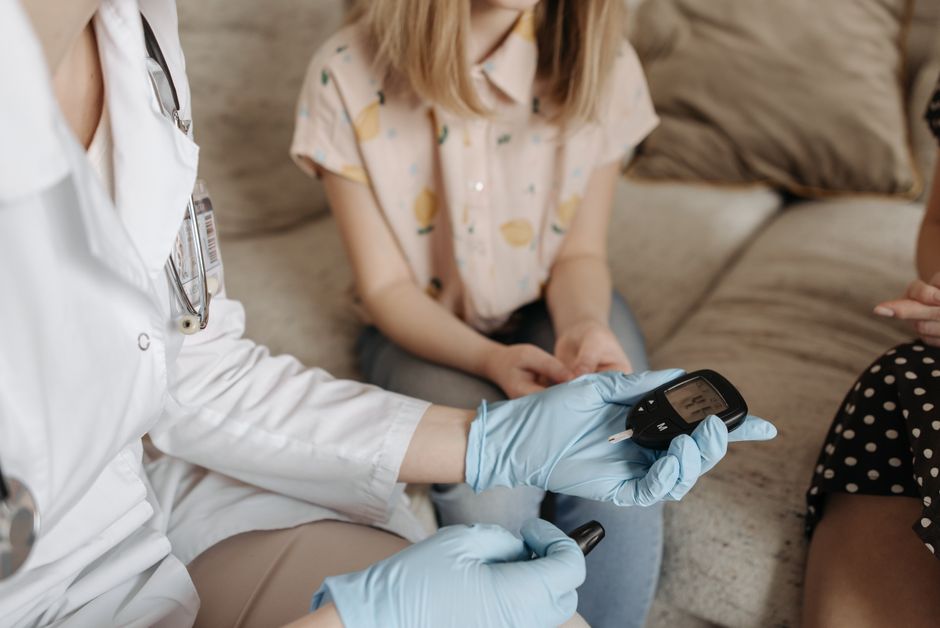
To lower blood sugar safely at home, use your prescribed treatment as directed, build meals around nonstarchy vegetables, protein, and high-fiber carbohydrates, add regular movement, and log glucose patterns instead of making medication changes alone. The CDC’s 2026 guidance gives many nonpregnant adults targets of 80 to 130 mg/dL before meals and under 180 mg/dL two hours after a meal begins, but personal targets can differ.
How can I lower my blood sugar at home without making it drop too low?
Lower blood sugar safely by treating home readings as feedback, not as a reason to independently change prescribed medicine. The useful move is the Pattern Log: record the reading, what you ate or drank, and physical activity. The CDC’s 2026 guidance says this tracking can show what makes blood glucose rise or fall, giving a clinician something concrete to review.
For many nonpregnant adults, the CDC’s 2026 guidance uses 80 to 130 mg/dL before meals and less than 180 mg/dL two hours after the start of a meal as typical targets. Those are reference points, not a self-prescribing tool. The strong version of a clinician message is: “For several days, my readings were higher after this meal pattern; can we review the log and my targets?”
| Situation | Practical response |
|---|---|
| Home readings are repeatedly above your personal target | Use the CDC’s 2026 tracking approach: log readings, meals, drinks, and activity, then share the pattern with the clinician directing care. |
| Glucose is below 70 mg/dL | The NIDDK’s 2026 guidance advises taking 15 to 20 grams of glucose or carbohydrate, rechecking after 15 minutes, and repeating if still low. |
| You are sick and glucose is 240 mg/dL or higher | The CDC’s 2026 treatment guidance says to check ketones and call a clinician if ketones are high. |
| Glucose stays at 300 mg/dL or above, or severe DKA symptoms appear | The CDC’s 2026 ketoacidosis guidance says to go to an emergency room or call 911. |
Movement helps, but the safety check matters. The NIDDK’s 2026 guidance notes that insulin and sulfonylureas can make glucose drop too low during exercise or when meals are skipped or delayed. The replacement behavior is simple: keep meals regular, follow the care plan, and ask the prescribing clinician how activity changes the plan.
What can I do today to reduce my A1C naturally?
Start with repeatable meals, regular activity, sleep-supporting routines, and reliable medication adherence; A1C changes slowly because it reflects average glucose over roughly 3 months, according to the 2021 international remission consensus report. A dramatic reset creates cognitive load. A boringly consistent week creates useful evidence.
Use the NIDDK’s 2026 plate method at the next meal: fill one-half of a 9-inch plate with nonstarchy vegetables, one-quarter with high-fiber carbohydrate foods, and one-quarter with protein foods. This is a plate-building system, not a forbidden-food list. It makes the carbohydrate portion visible without demanding that every meal look identical.
- Build the plate first. Start with vegetables and protein, then choose the carbohydrate portion. The phrase to use when planning a meal is: “What is the vegetable, protein, and high-fiber carbohydrate here?”
- Add manageable movement. The NIDDK’s 2026 guidance says most adults should aim for at least 150 minutes of moderate-intensity activity weekly and that smaller sessions count. The 2024 Diabetes Care review found that approximately 256 minutes of moderate-paced walking weekly corresponded to its estimated optimal activity dose for A1C reduction; that is context, not a requirement to begin at that level.
- Protect against low readings. The NIDDK’s 2026 guidance says activity beyond a usual routine can lower glucose for up to 24 hours afterward. Log the activity alongside readings rather than assuming every low or high has one cause.
- Bring the evidence to care. A short log turns “my numbers are unpredictable” into a conversation about specific meal, timing, activity, or illness patterns.
For prediabetes, the 2024 American Diabetes Association guidance reports that the U.S. Diabetes Prevention Program’s intensive lifestyle intervention reduced type 2 diabetes incidence by 58% over 3 years. It also reports that reaching at least 150 minutes of activity weekly reduced incidence by 44% even without reaching the program’s weight-loss goal. That is a useful trade-off: an all-or-nothing weight target is not the only marker of meaningful progress.
Which foods raise blood sugar the most?
Carbohydrate-containing foods generally raise blood glucose more after eating than protein or fat, according to the CDC’s 2026 guidance. The job is not to label one food “bad”; it is to spot which carbohydrate portions and combinations are followed by higher readings for you.
The NIDDK’s 2026 guidance explains that carbohydrates become glucose and notes that fruits, beans, potatoes, and corn can contain more carbohydrate than other foods. That does not make them automatic exclusions. A stronger question is: “What portion fits alongside vegetables and protein, and what does my log show afterward?”
Use swaps that reduce friction rather than pretending favorite foods disappear. Instead of building a meal around a large carbohydrate portion, use the plate method and make that food the one-quarter section. Instead of judging a reading in isolation, compare similar meals recorded on different days. The goal is a usable pattern, not a perfect meal.
Skip the supplement detour. The NIDDK’s 2026 guidance says there is no clear proof that specific foods, herbs, spices, or dietary supplements manage diabetes, and it warns that supplements can interact with diabetes medicines. The proven next move is less glamorous: meals, movement, readings, and a clinician-led review.
Frequently Asked Questions
Does walking after meals lower blood sugar?
Physical activity can lower blood glucose, and the NIDDK’s 2026 guidance says activity can be accumulated in smaller sessions toward weekly movement goals. A short walk after eating is a practical way to add movement, but people using insulin or sulfonylureas need an individualized plan because activity can contribute to low blood glucose.
Can type 2 diabetes be reversed with diet and exercise?
Some people can reach type 2 diabetes remission through lifestyle changes, medical treatment, or metabolic surgery, but it is not guaranteed. The 2021 international consensus defines remission as an A1C below 6.5% for at least 3 months without usual glucose-lowering medication, with continued testing at least yearly because high blood sugar can return.
When is a high blood sugar reading an emergency?
The CDC’s 2026 diabetic ketoacidosis guidance says to seek emergency care or call 911 if blood sugar stays at 300 mg/dL or above. Fruity-smelling breath, vomiting that prevents keeping fluids down, trouble breathing, or multiple ketoacidosis symptoms also require urgent action.
For this week, run one drill: choose three ordinary meals, use the plate method, and record the timing, food, activity, and readings your care plan calls for. Then ask one precise question at your next clinical check-in: “Which pattern in this log matters most for my plan?”
Sources
- Centers for Disease Control and Prevention: Managing Diabetes
- Centers for Disease Control and Prevention: Diabetic Ketoacidosis
- National Institute of Diabetes and Digestive and Kidney Diseases: Healthy Living With Diabetes
- National Institute of Diabetes and Digestive and Kidney Diseases: Low Blood Glucose
- American Diabetes Association: Prevention or Delay of Diabetes and Associated Comorbidities
- Diabetes Care: Optimal Dose and Type of Physical Activity to Improve Glycemic Control
- Diabetes Care: Consensus Report on Type 2 Diabetes Remission
Disclaimer: This article is for general information only and is not medical advice. It is not a substitute for diagnosis or treatment by a qualified healthcare professional. Always speak to your doctor before acting on anything you read here.